Buying
Buying a second-hand tandem: what to check
A used tandem can be very good value. It can also be a long, heavy collection of worn-out parts. Here is how to tell which one you are looking at.
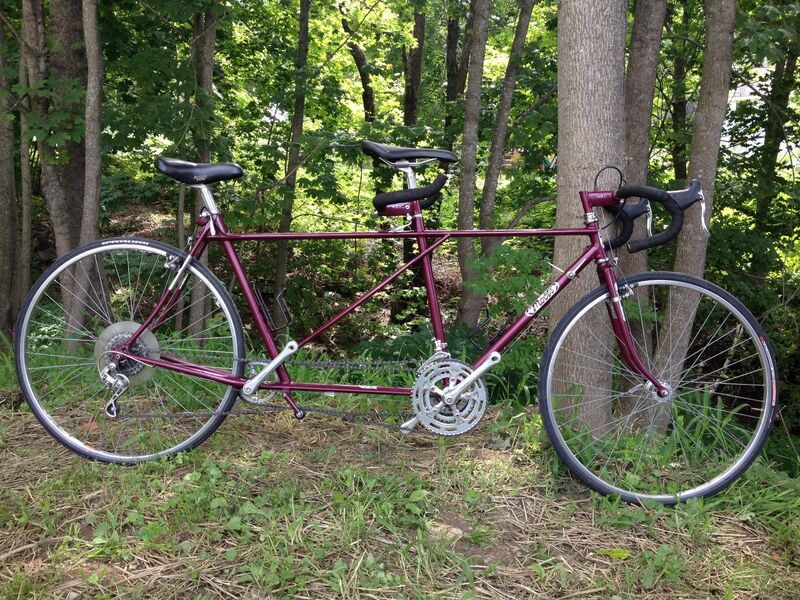
Specialist tandems are expensive new and thin on the ground in shops, so a lot of them change hands privately. A used tandem can be very good value. It can also be a long, heavy collection of worn-out parts. The checks below need no special tools beyond a tape measure and, ideally, the person you plan to ride with.
Where to look
Try tandem club classifieds, general classified and auction sites, local cycling club noticeboards and bike recycling projects. Specialist tandem dealers sometimes sell used bikes as well, with the advantage that someone who knows tandems has looked the bike over.
It also helps to know what a tandem costs at the bottom of the retail market, so that you can judge an asking price.
On our list at the last check: 6 tandems, priced from £427.98 to £3,108.43. All of them come from independent marketplace sellers on AliExpress rather than UK bike shops. They are generic, factory-made machines, so check the seller’s rating, delivery time and returns policy before you buy. See the tandems in stock, or read how each one is checked.
A well-kept used tandem from a specialist maker is a different class of machine from a generic one, and can be the better buy at a similar price. A neglected one is not.
Check the fit before anything else
A bargain that does not fit both of you is not a bargain. Ask the seller for the seat tube length and standover height at both positions before you travel. When you get there, check that the captain can stand astride the bike with both feet flat on the ground, that the stoker has room between saddle and handlebars, and that both seatposts and the stoker’s stem actually move. Seatposts can seize in bikes that have stood unused for years, and a tandem has two of them.
Frame and forks
- Look along the bike from the front and from behind. Both wheels should sit in line and upright in the frame.
- Inspect every joint for cracks or rippled paint, especially around the two bottom brackets, the head tube and the tube that joins the bottom brackets.
- Dents, deep rust on steel and paint bubbling over corrosion on aluminium are reasons to haggle hard or leave.
- Lift the front wheel and turn the handlebars. The steering should be smooth, with no notch in the straight-ahead position. Then hold the front brake on and rock the bike back and forth to feel for play in the headset.
The timing chain and its adjuster
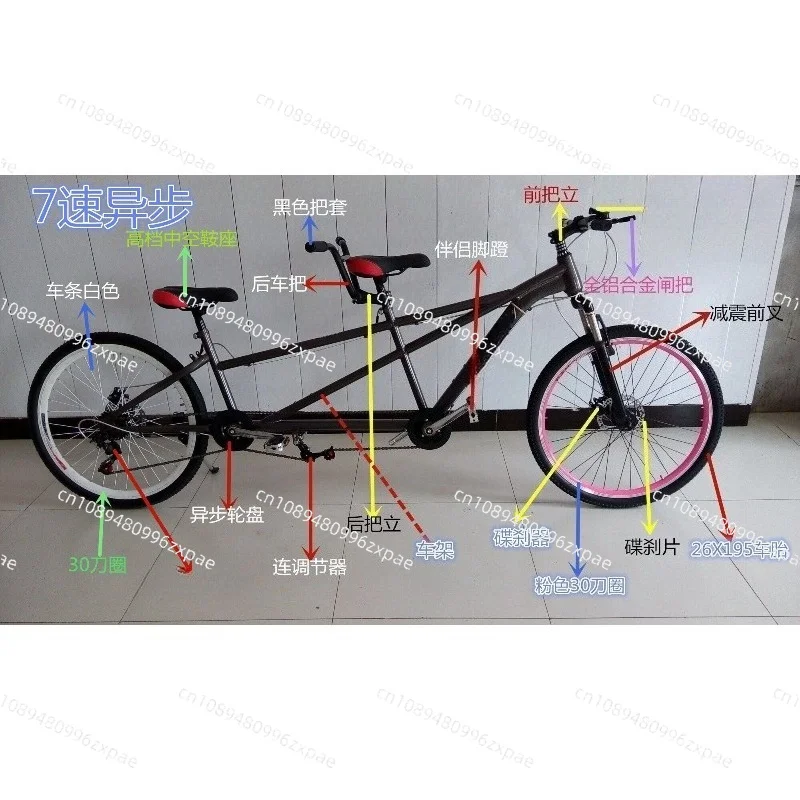
The chain that links the two sets of cranks has to be kept at the right tension. On most tandems that is done with an eccentric: the front bottom bracket sits off-centre in an oversized shell and is rotated to take up the slack. Ask the seller to show you that it moves, or check for yourself that the clamp bolts or wedge are not seized or rounded off. A sagging timing chain with an adjuster that will not budge is a workshop job.
While you are down there, look at the teeth on the timing rings and the drive chainrings. Teeth worn into hooked, shark-fin shapes mean the chains and rings are due for replacement together.
Wheels
Tandem wheels work hard. Spin each one and watch the gap to the brake pads or the frame for wobbles and hops. Squeeze pairs of spokes all the way round to find any that are loose or broken. On rim-braked wheels, feel the braking surface: if it is noticeably hollowed, the rim is near the end of its life.
Ask what the rear hub spacing is. Many tandems use a wider rear hub than solo bikes, 145mm being a common size, so a replacement rear wheel has to be a tandem one.
Brakes, cables and tyres
Brake hard on the test ride with both of you on board. Check how much pad is left and, on disc brakes, that the rotors are not deeply scored.
The cables that run to the back of a tandem are longer than standard ones, so stiff or frayed cables mean buying tandem-length replacements. Tyres perish with age even when the tread looks new. Look for cracks in the sidewalls, and budget for two new tyres and tubes if the bike has been in a garage for long.
The test ride
Ride it together, and not just round the car park. Go through every gear under load, listen for creaks from the bottom brackets when you both push hard, and find a hill if there is one. If neither of you has ridden a tandem before, read up on captain and stoker roles first, or ask the seller to captain for a short spin.
Paperwork and common sense
Ask how long the seller has owned the bike and whether they have a receipt or any service history. Note the frame number. View the bike at the seller’s home rather than in a lay-by, and be wary of a price that looks too good. With a used electric tandem, ask how old the battery is and whether replacements are still available, because a new battery can cost a significant part of what the bike is worth.
Budget for putting it right
Even a good used tandem usually needs some money spent on it. A typical list is tyres and tubes, a drive chain, a timing chain (which is longer than a standard chain, so it takes more than one to make), cables, brake pads and bar tape or grips. Get a rough price for those before you make an offer, and take it off what you are prepared to pay.
Then think about getting it home. A tandem does not fit a normal bike rack, so read how to transport a tandem before you set off to collect one. If the search turns up nothing suitable, choosing your first tandem covers buying from a retailer instead.